
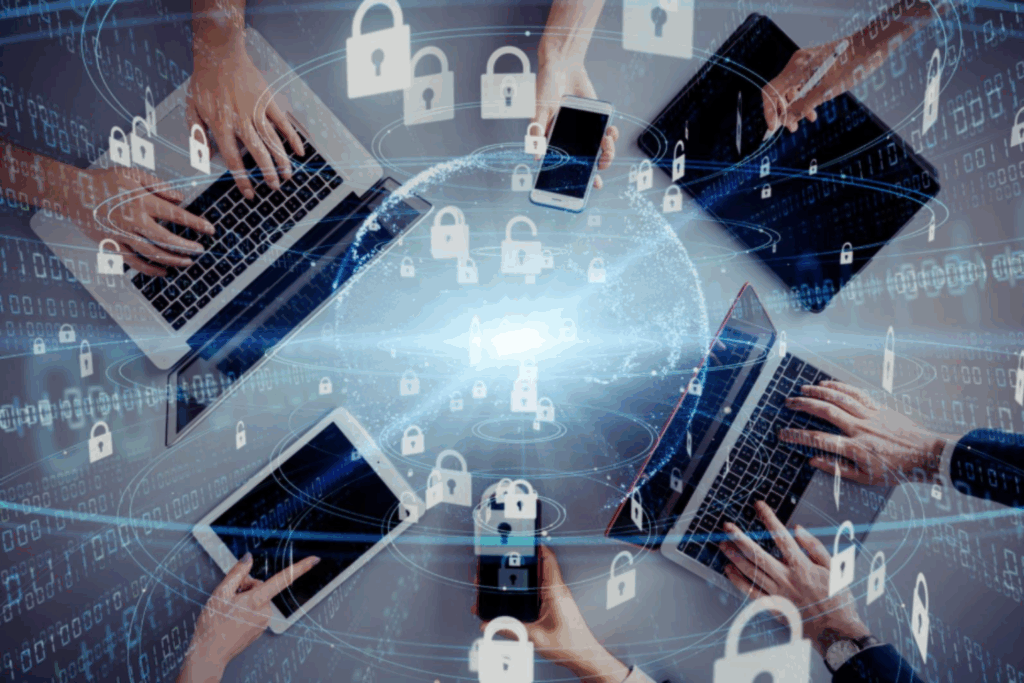
Mobile devices are now part of how business gets done.
Your team is checking email on their phones, accessing files from laptops at home, and jumping between devices throughout the day. It’s convenient—but it also opens the door to security risks most businesses aren’t fully prepared for.
Every mobile device connected to your systems is a potential entry point.
And without the right protections in place, it only takes one mistake—a lost phone, a bad link, an unsecured network—to create a serious problem.
Here are four practical ways to improve your mobile security without overcomplicating things.
1. Secure Your Mobile Workforce
Work doesn’t just happen in the office anymore, so your security can’t stop there either.
If employees are accessing company data from multiple devices and locations, you need to make sure those connections are secure.
Start with the basics:
- Strong passwords and multi-factor authentication
- Secure remote access (like VPNs)
- Device encryption
- Mobile device management (MDM)
This isn’t about locking everything down—it’s about making sure your team can work from anywhere without creating unnecessary risk.
2. Keep Your Team’s Communication Secure
Most teams rely on a mix of email, chat, and cloud apps to stay connected. The problem is, these tools are often where security issues start.
If access isn’t controlled or monitored, sensitive information can easily end up in the wrong place.
A few simple improvements can go a long way:
- Require authentication for all tools
- Limit access based on roles
- Use secure, encrypted platforms
- Keep an eye on unusual activity
You want your team collaborating freely—but not at the expense of security.
3. Protect Against Mobile Cyber Threats
Mobile devices are a growing target for cyberattacks, especially phishing.
And it works.
Over 90% of cyberattacks start with phishing.
That means one convincing email or message can be enough to compromise credentials or expose company data.
To reduce your risk:
- Use mobile security tools to detect threats
- Block unapproved apps and downloads
- Enable remote wipe for lost devices
- Train employees to spot suspicious activity
Technology helps—but awareness is what usually makes the difference.
4. Build a Scalable Mobile Security Strategy
As your business grows, so does the number of devices, users, and potential risks.
If security is handled ad hoc, things get messy fast.
Instead, think long-term:
- Create clear, simple security policies
- Keep devices updated automatically
- Monitor access and activity
- Reinforce training regularly
A good strategy doesn’t just protect you today—it makes it easier to stay secure as your business evolves.
Stay Ahead of Mobile Security Risks
Mobile work isn’t going away. If anything, it’s only becoming more common.
The businesses that stay ahead of security risks aren’t the ones with the most tools—they’re the ones with a clear, practical approach.
If you can secure your devices, control access, and keep your team aware, you’re already in a much stronger position.
Get the Full Mobile Security Guide
If you want a more detailed breakdown of these strategies, we put together a quick guide you can use with your team.
It walks through exactly how to secure devices, protect data, and build a mobile security plan that actually works.
Download the guide below!
FAQs: Mobile Security
Mobile security is important because employees often access business email, files, and apps from phones, tablets, and laptops. Each connected device creates a potential entry point for cyber threats, data loss, or unauthorized access.
Some of the biggest mobile security risks include phishing attacks, lost or stolen devices, unsecured public Wi-Fi, weak passwords, unapproved apps, and employees accessing company data without proper protections in place.
Businesses can improve mobile device security by using strong passwords, multi-factor authentication, device encryption, VPN access, mobile device management (MDM), and remote wipe capabilities for lost or stolen devices.
Mobile device management (MDM) is a solution that helps businesses monitor, manage, and secure employee devices. It matters because it gives IT teams more control over security settings, app access, updates, and device protection across the organization.
Phishing is one of the most common mobile security threats because employees often check email and messages quickly on their phones. A single malicious link or fake login page can lead to stolen credentials, malware, or data exposure.
To protect remote and hybrid employees, businesses should require secure logins, use encrypted communication tools, provide VPN access, limit user permissions by role, and train employees to recognize suspicious activity.
If a work phone is lost or stolen, the business should immediately revoke access, remotely lock or wipe the device if possible, reset associated passwords, and review account activity for any signs of unauthorized access.