
What Is DNS Filtering?
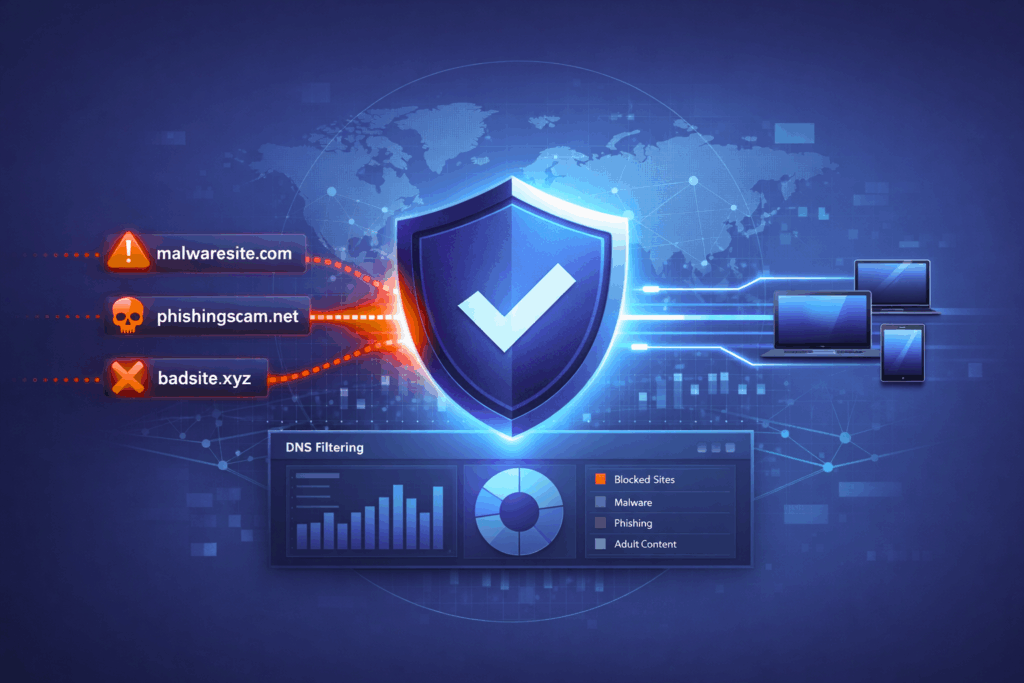
DNS (Domain Name System) filtering is like a security guard stationed at your internet doorway. When a user tries to visit a website, a DNS query is made to match the domain name (like example.com) to its IP address. DNS filtering checks that query against a list of approved or blocked sites before allowing the connection. If the domain is known to host malware, phishing attempts, or other malicious content, the request is blocked before any data is transferred.
Why It Matters for Business
- Stops Threats Early
Because filtering happens before a webpage even loads, it can prevent many threats from ever reaching your network. - Improves Productivity
You can block access to non-work-related or inappropriate websites, helping keep your team focused and aligned with company policy. - Enhances Compliance
For industries with strict data protection requirements, DNS filtering helps demonstrate due diligence in securing internet traffic. - Works Across Devices
Whether employees are working in the office, remotely, or on mobile devices, DNS filtering can follow them — reducing the risk of off-network exposure.
Built-In Flexibility
Modern DNS filtering tools are highly customizable. You can tailor policies by user role, department, or location. Reporting dashboards also give you clear insights into what’s being blocked and why, helping IT teams spot patterns and fine-tune controls.
The Bottom Line
DNS filtering is not a silver bullet, but it adds a meaningful layer of protection that’s low-cost, easy to manage, and highly effective. It’s a first line of defense that supports a layered security strategy — and in today’s threat landscape, every layer counts.
DNS Filtering FAQs
Not at all. DNS filtering typically operates with minimal latency and often speeds up browsing by blocking harmful or unnecessary sites.
Yes. You can create custom allowlists and blocklists based on your organization’s needs, roles, or departments.
Absolutely. DNS filtering can block access to known phishing sites before users ever reach them, preventing credential theft.
No. Most DNS filtering solutions are cloud-based and easy to deploy without additional infrastructure.